
Do You Need New Appliance Parts? 5 Signs to Check
Posted by Editorial Team on
Last Updated: October 25, 2026
Quick Summary
You need new appliance parts when you notice grinding, humming or rattling noises, leaks or water pooling, weak or inconsistent performance, rising energy bills from longer cycles, or burning smells, foul odours and error codes. Confirm the exact model and serial number from the appliance plate, then verify the part number against a parts diagram before ordering. If the part costs less than a quarter of a replacement appliance and the repair is a single component, repair it.
- Grinding in a washer often points to a worn motor to gearbox coupling.
- Turn off the appliance at the wall and shut off the water supply before inspecting a leak.
- A fridge with a failing fan motor runs non-stop trying to hold temperature.
- Switch off an appliance that smells like burning plastic and do not use it again.
- A $62.85 oven element or $31.99 washer coupling is a fraction of a new appliance.
Table of Contents
- 1. Strange Noises: Grinding, Humming and Rattling
- 2. Leaks, Moisture and Water Pooling Around the Unit
- 3. Weak or Inconsistent Performance and Temperature Fluctuations
- 4. Rising Energy Bills and Constantly Running Cycles
- 5. Burning Smells, Foul Odours, Error Codes and Warning Lights
- How to Identify a Faulty Appliance Part Before You Buy
- Repair or Replace: Weighing Part Cost Against a New Appliance
- Genuine Appliance Spare Parts vs Cheap Copies
- What to Check Before You Order Any Appliance Part
- Frequently Asked Questions
1. Strange Noises: Grinding, Humming and Rattling
A grinding, humming or rattling appliance is telling you a component has worn, loosened or failed. That noise is one of the clearest signs your appliance needs new appliance parts, and it usually gets worse the longer you ignore it. Allfix Electrical has over 40 years of experience in electrical repair and parts supply.
Grinding usually points to a worn motor bearing, a failing pump or a gearbox coupling that has lost its grip. Humming with no action often means a motor start capacitor has given up, so the motor sits there buzzing instead of turning. Rattling is often something simpler: a loose fan, a worn belt or a dryer blower belt that has stretched and started slapping.
What Each Noise Usually Points To
- Grinding in a washer: worn motor to gearbox coupling, especially if clothing has tangled around the agitator
- Humming but not starting: a failed motor start/run capacitor
- Rattling in a dryer: a stretched blower fan belt or a loose fan assembly
- Buzzing in a dishwasher: a failing drain pump, often paired with poor drainage
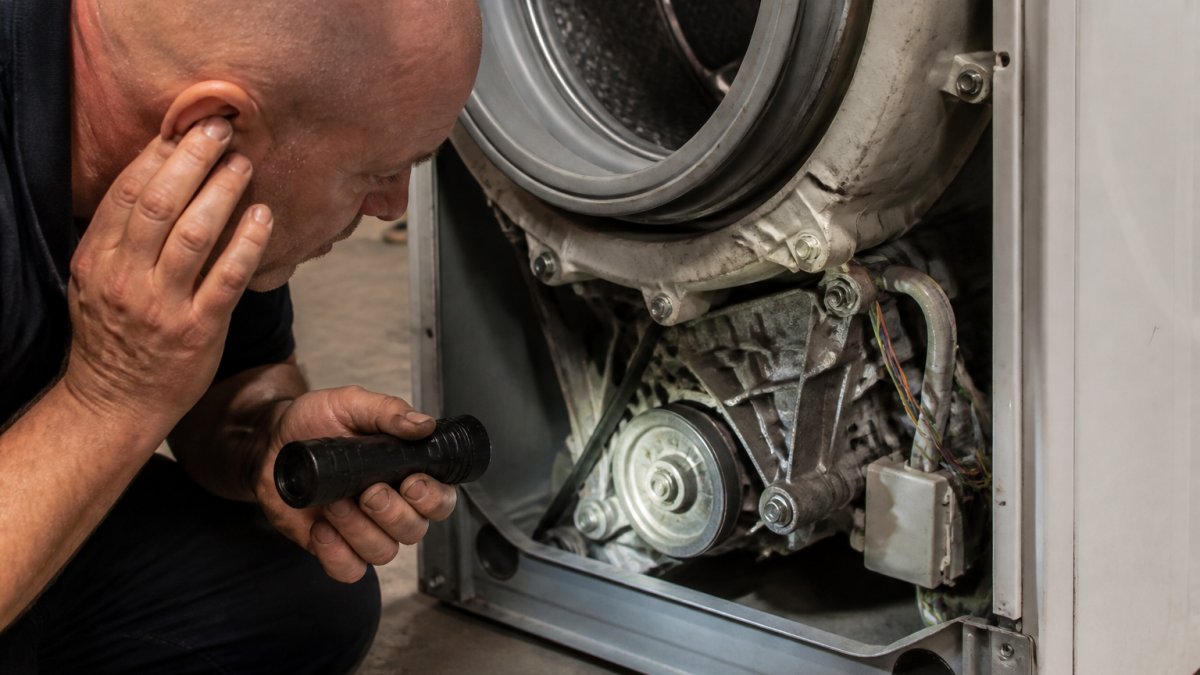
2. Leaks, Moisture and Water Pooling Around the Unit
Water pooling around a washer, dishwasher or fridge is never a small problem. Leaks and moisture are usually caused by a failed seal, a cracked hose or a blocked drain path, and each one can turn into water damage if you leave it. A leaking front loader often needs a new door gasket; a leaking dishwasher often needs a new inlet hose or drain pump.
Safety Triage: What to Do Before You Touch Anything
Turn the appliance off at the wall and shut off the water supply before you inspect anything. Move electrical cords away from the wet area and dry the floor. If water has reached a power point or the appliance's control board, stop and call a licensed electrician or appliance technician.
- Switch off at the wall
- Close the water tap
- Move cords clear of water
- Dry the floor and check for moisture near electrics
- Photograph the leak point before disassembly
Watch out: a slow leak under a fridge or washer can rot flooring and cabinets for weeks before you notice it, so check the base and back panel monthly.
3. Weak or Inconsistent Performance and Temperature Fluctuations
Weak performance, inconsistent cooling or uneven heating almost always traces back to a specific part. When a fridge runs warm, a fan motor, thermostat or defrost fuse is usually involved. When an oven heats unevenly, the fan forced element is usually the culprit. When a dishwasher leaves dirty dishes, the drain pump or spray arm is the first place to look.
In practice, this means you can often fix a "failing" appliance for the cost of one component. A fridge evaporator fan motor that has stopped circulating cold air causes inconsistent cooling and ice buildup; replacing it restores airflow. An oven element that has partially failed causes extended cooking times and uneven browning. A dishwasher pump that has weakened leaves water pooling and dirty dishes behind.
4. Rising Energy Bills and Constantly Running Cycles
An appliance that runs longer, cycles constantly or pushes up your energy bills is working harder than it should. That extra effort usually means a worn part is forcing the motor or heating element to compensate. A dryer with a stretched belt or a blocked airflow path takes longer per load. A fridge with a failing fan motor runs non-stop trying to hold temperature.
Longer operating cycles and extended drying time are two of the most overlooked signs your appliance needs new parts, because nothing has visibly broken yet. Rising energy consumption is the quiet warning: the appliance is still working, but inefficiently.
5. Burning Smells, Foul Odours, Error Codes and Warning Lights
A burning smell is an immediate safety signal: switch the appliance off at the wall and do not use it again until it has been checked. Foul odours usually point to trapped moisture, a blocked drain or a failing seal. Error codes and warning lights are the appliance telling you which circuit has detected a fault, and they are the fastest route to the right part.
- Burning smell: often a failing motor, wiring or heating element. Stop using the appliance.
- Foul odour in a washer: a perished door gasket trapping moisture and mould
- Foul odour in a dishwasher: a blocked drain pump or food debris in the filter
- Error codes and warning lights: the control board flagging a sensor, pump or element fault
- Unresponsive controls: often a control board or door switch fault
Watch out: never keep running an appliance that smells like burning plastic or hot wiring, even if it still works.
How to Identify a Faulty Appliance Part Before You Buy
Identifying the faulty part starts with three steps: confirm the symptom, find the model number, and trace the symptom to the component. A common mistake is ordering the first part that sounds right without checking the model plate. Every appliance carries a model and serial sticker, usually inside the door, on the back panel or behind the kick plate.
LG LD-1452MFEN2 New Type Dishwasher Pump Motor Body - Part No. EAU62043401 →
Once you have the model number, match the symptom to the likely component, then confirm the part number against a parts diagram. If you're unsure whether to tackle the repair yourself, our guide on whether DIY appliance repair is worth it walks through the trade-offs. Then use our guide to reading appliance parts diagrams to confirm the exact component before you order.
Repair or Replace: Weighing Part Cost Against a New Appliance
Repair usually wins when the part cost is a small fraction of a new appliance and the unit is otherwise sound. A $62.85 oven element or a $31.99 washer coupling is a fraction of a new appliance, and a straightforward swap restores full function. Replace instead when the cabinet, drum or control board has failed, or when several major components are worn at once.
Our rule of thumb: if the part costs less than a quarter of a replacement appliance and the repair is a single component, repair it. If you're weighing up a repair, our parts guide for appliance repairs helps you see which components are available and what each one does.
| Situation | Better choice | Why |
|---|---|---|
| One worn component, appliance otherwise sound | Repair | Part cost is a small share of a new unit |
| Two or more major components failed | Replace | Combined cost approaches a new appliance |
| Cabinet, drum or frame damaged | Replace | Structural repair rarely pays off |
| Discontinued model, part still available | Repair | Sourcing the part is the only barrier |
Genuine Appliance Spare Parts vs Cheap Copies
Genuine appliance spare parts fit correctly, carry a warranty and are built to the original specification. Cheap copies often look similar but vary in dimensions, ratings and materials, which shortens service life and can cause a second failure.
Compatibility is the other trap. If you're worried about sourcing a part for an older appliance, our guide to finding discontinued appliance spare parts covers how to track down hard-to-find components.
Take a leaking LG front loader: the genuine door gasket for models such as the WD-1236TD and WD-1433RD is listed at $77.59, and a correct fit resolves the leak in one repair.
What to Check Before You Order Any Appliance Part
Before you order, run through this short checklist so you don't waste money on the wrong component:
- Confirm the exact model and serial number from the appliance plate
- Match the symptom to the likely component, not just the noise
- Verify the part number against a parts diagram for your model
- Check whether the part is genuine or a compatible equivalent
- Confirm warranty terms and return policy before purchase
- For used parts, confirm the warranty period and condition notes
A common mistake is buying a part that fits the brand but not the model. Another is skipping the safety step on anything electrical or water-related. If a repair involves the control board, mains wiring or a gas component, use a licensed technician rather than attempting it yourself.
Frequently Asked Questions
How can I tell if my appliance needs a replacement part or a whole new unit?
Start with the age of the appliance and the cost of the part. If the machine is well past its typical service life and the repair bill approaches half the price of a new unit, replacement usually wins. If it is a single failed component, such as a door gasket or fan element, a part costing tens of dollars rather than hundreds is almost always worth fitting. Get a professional diagnosis if you are unsure which component has failed.
Can a faulty appliance part cause unusual noises or smells?
Yes, and both are useful clues. Grinding or rattling often points to a worn motor coupling, blower belt or fan motor, while a burning smell usually means a heating element, capacitor or wiring connection is failing. Foul odours from a fridge or washer often trace back to blocked drains, worn seals or mould in a gasket. Switch the appliance off at the wall before investigating, and do not keep running a unit that smells like burning.
How do I find the right replacement part for my appliance?
Note the brand, full model number and, where relevant, the serial number from the rating plate, then match that against the part listing. A good supplier will let you confirm compatibility before purchase, so ask before you buy if the listing is unclear. Check the part number against any equivalent or superseded numbers shown, and reuse original seals where the listing says they are needed rather than assuming a new one is included.
Where can I find discontinued appliance spare parts?
Discontinued parts are often still available as superseded equivalents or as tested secondhand components. Search using the original part number and any replacement numbers listed for it, and ask a specialist supplier to cross-check your model. Secondhand parts from a reputable seller usually carry a short warranty, so confirm the terms before ordering. If nothing matches, a technician may be able to adapt a compatible part from a related model.
How do I know I am ordering the right part and not wasting money?
Match three things: the model number, the original part number and the physical specs such as voltage, wattage and dimensions. For example, a fan forced oven element is rated at 2100 watts and 240 volts with a 19.5cm diameter, so a different rating will not suit. Send your full model number to the supplier before ordering if anything is unclear, and confirm the warranty and returns policy so a wrong pick is not a lost purchase.
Diagnosing the fault is the hard part; sourcing the right part should be the easy part. At Allfix Electrical, we've supplied appliance parts to the trade and retail for over 40 years, with fast handling on orders and expert help matching the correct component to your model. Browse our extensive inventory, contact us with your model number, and get the right part the first time. Search our store and get your appliance running again.

Share this post
- 0 comment
- Tags: 5 signs your appliance needs new parts, appliance parts, finding discontinued appliance spare parts, genuine appliance spare parts, how to identify a faulty appliance part
0 comment