Sourcing Discontinued Appliance Parts: A Step-by-Step Guide
Posted by Editorial Team on
Quick Summary
To source discontinued appliance parts, first find your exact model and serial number, then look up the original part number and any superseded replacement. Next, check stock with the manufacturer's authorised suppliers, online marketplaces and specialist parts sites before confirming the part fits your model.
- Photograph the model and serial label before you start searching for a part.
- Search the exact part number in quotes to find any newer superseded replacement.
- Ask suppliers whether the part is in stock and what their return policy is.
- Confirm the listing names your exact model and serial prefix, not just the model family.
- Never substitute an uncertified aftermarket part for a safety-critical component such as a thermal cut-out or gas valve.
Table of Contents
- Sourcing Discontinued Appliance Parts: A Step-by-Step Guide
- Why Discontinued Appliance Parts Are Hard to Find and When Sourcing Is Worth It
- Step 1: Identify Your Appliance Using Its Model and Serial Number
- Step 2: Find the Original Part Number and Any Superseded Replacements
- Step 3: Check Stock Availability With Suppliers, Marketplaces and Specialist Sites
- Step 4: Verify Compatibility Before You Buy, Including Aftermarket and Used Options
- Assessing Seller Reliability, Part Condition, Shipping and Returns
- Booking Your Next Part Search With Allfix Electrical
- Frequently Asked Questions
Sourcing Discontinued Appliance Parts: A Step-by-Step Guide
Last Updated: November 17, 2026
Why Discontinued Appliance Parts Are Hard to Find and When Sourcing Is Worth It
Finding a part for a fridge or washing machine that the manufacturer no longer makes is frustrating. Many homeowners in Australia discover a broken basket or door shelf only after the appliance is out of production.
Sourcing a discontinued part is often worth the effort. Before you start searching, though, weigh the cost of the part against the age and condition of the whole appliance.
Here is a quick way to decide:
- Worth sourcing: the rest of the appliance works well and is under about 10 years old
- Maybe not worth it: the appliance is old and has other faults
- Check first: the part is a small, low-cost item like a bin or cover
The main reason parts are hard to find is simple. Manufacturers stop stocking parts after a product line ends, and stock runs out.
Step 1: Identify Your Appliance Using Its Model and Serial Number
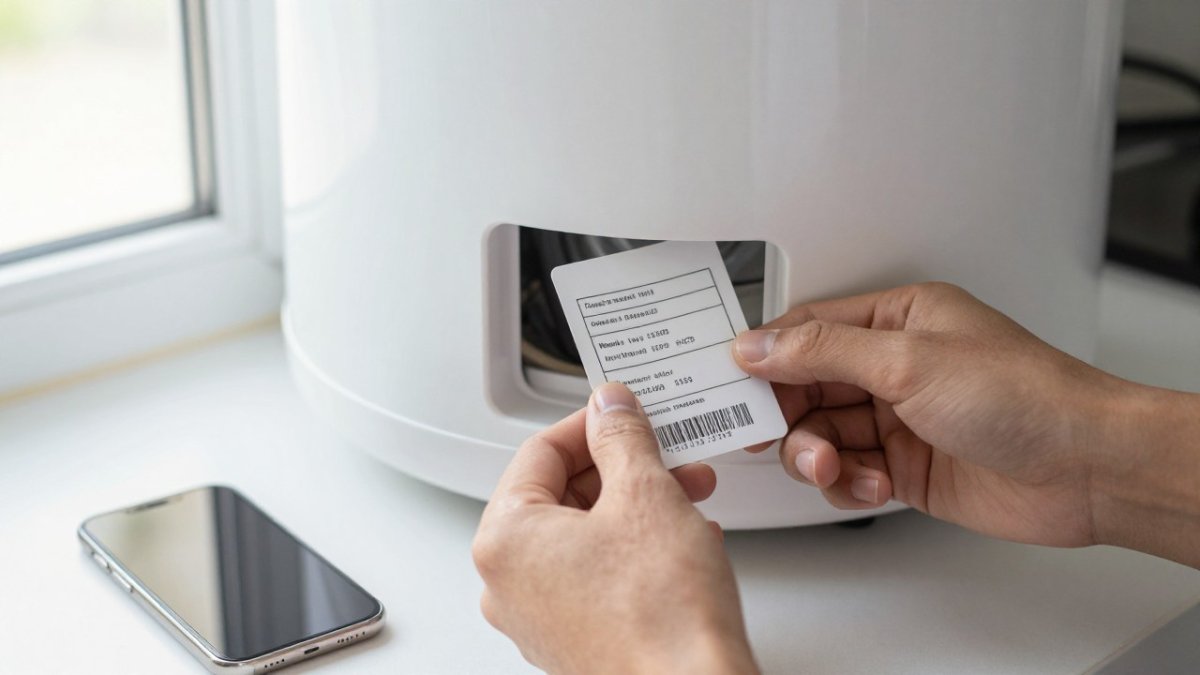
Start with the model number. It is usually on a label inside the door, on the side wall, or at the back of the appliance.
Write down the full model number and the serial number. Small differences matter. Two models with similar names can take different parts.
Tips for finding the right model:
- Take a clear photo of the label before you go searching
- Check the brand and model in the appliance's manual
- Note the year of purchase, since it helps narrow down the match
Step 2: Find the Original Part Number and Any Superseded Replacements
Once you know the model, look for the original part number. It is often printed on the old part itself. Search the part number online to see if a newer part has replaced it.
A superseded part is a newer part number that replaces an older one. This is common. A new part number does not always mean the old part is gone, but it can help you find stock.
Search tips that help:
- Search the exact part number in quotes
- Try the model number together with the part name
- Check whether one part number lists more than one model
Step 3: Check Stock Availability With Suppliers, Marketplaces and Specialist Sites
Once you have the part number, check who has it in stock. Start with the manufacturer or its authorised suppliers. If they no longer stock the part, try these options:
- Appliance parts suppliers: call or email them with the part and model number
- Online marketplaces: search by part number and filter for Australian sellers
- Specialist parts websites: these often list used and remaining stock
Our own inventory is one option. At Allfix Electrical, we list used parts such as the Used Westinghouse RS623S Top Freezer Basket - Part # 1406067SH for $15.00, and the Used Simpson SBM3800MA SBM5100MA Fridge Lens Light Cover - Part # 1443930SH for $30.00. Stock changes often, so confirm availability before you order.
When you contact a supplier, ask these questions:
- Is this part in stock right now?
- Is there a superseded part number?
- What is the return policy if the part does not fit?
Step 4: Verify Compatibility Before You Buy, Including Aftermarket and Used Options
Compatibility is where most sourcing attempts fail. A part can carry the right part number and still not fit, because manufacturers revise designs mid-production, and aftermarket makers cross-reference loosely.
Work through these checks in order before you pay:
- Model list, not model family. Confirm your exact model and serial prefix appear on the listing. A part that fits the RS651F series may not fit every variant in that series. If the seller lists only the family name, ask for the full compatibility list in writing.
- Superseded and cross-referenced numbers. A listing may show the original number with a note such as "replaces 1438314". Check both numbers against your appliance's parts diagram. Where a superseded part is listed, confirm whether the revision changed the mounting points, connector type, or dimensions, a superseding number does not guarantee a drop-in fit.
- Dimensions and mounting. Measure the old part at its widest points, including clips, tabs, and screw holes. Compare those measurements with the listing. For baskets, shelves, and covers, a few millimetres of difference in rail spacing is enough to stop the part seating correctly.
- Electrical ratings. For motors, elements, thermostats, switches, and control boards, match voltage, wattage, current rating, and connector pin count. An aftermarket part with the same shape but a lower rating can fail early or trip protection circuits. Where the rating is not published, ask the seller before ordering.
- Revision differences. Manufacturers sometimes change a part mid-run without changing the appliance model. If your appliance was built across a revision boundary, the serial number is the better guide to which revision you have. Note it when you enquire.
- Aftermarket equivalence. Aftermarket parts are often reverse-engineered. They may fit but lack the same tolerances or safety certification. Check whether the part carries recognised electrical safety certification for the local market, and prefer aftermarket only for low-risk, non-safety components.
Watch out: a part that fits physically can still be wrong electrically, never substitute a safety-critical component such as a thermal cut-out, gas valve, or high-voltage control board with an uncertified aftermarket equivalent.
If the seller cannot confirm compatibility in writing, treat the part as unverified and keep looking. A short email exchange before purchase is cheaper than return postage on a part that does not fit.
Before you pay, check these points in order to avoid buying a part that does not fit.
| Check | What to confirm | Risk if skipped |
|---|---|---|
| Model list | Exact model and serial prefix on listing | Part fits family but not your variant |
| Superseded numbers | Compare both numbers against parts diagram | Revision changed mounting or connector |
| Dimensions | Measure widest points, clips and screw holes | Part will not seat correctly |
| Electrical ratings | Match voltage, wattage, current and pin count | Early failure or tripped protection |
| Revision differences | Use serial number to identify revision | Mid-run design change |
| Aftermarket equivalence | Check safety certification for local market | Uncertified safety-critical component |
Assessing Seller Reliability, Part Condition, Shipping and Returns
Once you have found a candidate part, the decision shifts from "does it exist" to "is this seller and this part worth the money and risk".
Seller checks
- Look for a trading name, physical address, phone number, and an Australian Business Number. A seller who publishes none of these is harder to pursue if something goes wrong.
- Check whether the seller specialises in appliance parts or is a general marketplace listing.
- Read the returns policy in full. Note the return window, who pays return postage, and whether the part must be unfitted and in original packaging.
- Ask how the part is graded. Terms such as "used", "refurbished", "tested", and "new old stock" mean different things between sellers. Get the grading in writing.
Part condition checks
- For used parts, ask for photos of the actual item, not a stock image. Look for cracks, corrosion, missing clips, bent terminals, or evidence of prior repair.
- For refurbished parts, ask what was replaced and whether the work was done by a qualified technician. A refurbished control board with no documentation is a gamble.
- For new old stock, check the manufacture date where shown. Rubber seals, plastics, and capacitors degrade with age even when unused.
- Confirm the warranty period and what it covers. Many used-part warranties cover faults on arrival but exclude damage from fitting or normal wear.
Shipping and returns
- Ask for the dispatch time and the delivery estimate before paying. Discontinued parts often ship from interstate or overseas, which adds days.
- Confirm who pays return postage for a part that does not fit. On low-value parts, return postage can approach the part price, which changes the maths.
- For international sellers, check the part number against the local variant. Voltage, plug configuration, and mounting can differ between regions even when the part number looks similar. Factor in shipping, customs charges, and the longer return cycle.
- Keep all packaging and paperwork until the part is fitted and working. Most returns require the original packaging.
Cost and risk comparison
Weigh each option against the value of the appliance:
- New old stock: highest likelihood of a correct fit, but limited availability and no ongoing manufacturer support.
- Refurbished: good value for control boards and motors where the refurbisher documents the work; higher risk where documentation is absent.
- Used: cheapest, but condition varies and warranty is usually short. Best for non-critical cosmetic or mechanical parts such as baskets, shelves, and covers.
- Aftermarket: can be an option for obsolete parts, but check certification and ratings, and avoid it for safety-critical components.
- Repair or fabrication: worth considering for simple mechanical parts, but not for electrical or gas components unless a qualified technician is involved.
- Replacing the appliance: if the part is expensive, the appliance is old, and other components are near end of life, replacement can be the lower-risk choice.
Watch out: a seller who pressures you to pay outside the platform's checkout, or who cannot provide a written returns policy, is a poor risk regardless of price. Keep the transaction on a platform that records it.
When the part arrives, compare it with the old one before fitting, test-fit where possible, and keep the packaging until you are satisfied. If it does not match the listing, raise the issue with the seller promptly and in writing, within the return window.
Booking Your Next Part Search With Allfix Electrical
Sourcing discontinued parts takes patience, but the steps stay the same: identify the model, find the part number, check stock, and verify fit. At Allfix Electrical, we have supplied appliance parts for over 40 years and we can help you match a part to your model. If you are not sure which part you need, contact our team and we will help you check before you buy.
Frequently Asked Questions
How do I find a part for a discontinued appliance?
Start with the model number and serial number from the appliance's rating plate, then search for the original part number alongside the model. Check the manufacturer's remaining stock first, then move to specialist appliance parts suppliers, secondhand marketplaces and salvage sellers. If you find a listing that matches the part number and lists the appliance models it fits, ask the seller to confirm the fit before paying. Keeping a record of each source you check helps you avoid repeating searches.
How can I identify the correct appliance part number?
The original part number is usually printed on the part itself, on a sticker, or in the parts diagram in the service manual for your model. If the part is already removed, compare its shape, dimensions and mounting points with photos from a supplier. Searching the model number with the words 'parts diagram' often returns exploded views that list each component's number. Where a part has been superseded, the manufacturer's updated number is often listed alongside the old one.
Can I use a compatible replacement for a discontinued appliance part?
Often yes, but only after you confirm the fit. Compatible or cross-referenced parts are listed by suppliers as fitting several models, and used parts from the same model range are a common choice. Measure the part, compare the connectors and mounting points, and check whether the seller lists the models it fits. Aftermarket parts may differ slightly in materials or tolerances, so confirm the warranty and returns policy before you buy.
Is it worth repairing an appliance with discontinued parts?
It depends on the part cost, the age of the appliance and the cost of a replacement unit. Add the price of the part, postage and any tools to the price of a comparable second-hand or new appliance. For a low-cost, easy-to-fit part on a sound appliance, sourcing it is usually worthwhile. For expensive parts on an older unit, or repairs that involve gas, high voltage or refrigerant, a licensed technician should assess the job before you proceed.

Share this post
- 0 comment
- Tags: appliance model number lookup, appliance parts suppliers, appliance replacement part numbers, compatible appliance parts, discontinued appliance parts, how to source discontinued appliance parts
0 comment