
How to Replace a Washer for Washing Machine Inlet Hoses
Posted by Editorial Team on
Last Updated: November 1, 2026
Quick Summary
A washer for washing machine inlet hoses is a small rubber or silicone ring that sits inside the hose nut and seals the connection against the tap and the machine. To replace it, turn off both taps, unscrew the hose nut, pick out the old ring, seat the new washer flat inside the nut, then reconnect and tighten hand-tight plus a quarter turn. The job takes about fifteen minutes with basic tools.
- Most domestic machines use a standard connection size at both ends of the inlet hose.
- Measure outer diameter, inner diameter and thickness before buying a replacement washer.
- Inlet washer thickness is usually 1.5mm to 3mm, and a thicker ring can stop the nut engaging fully.
- Clean filter washer mesh every six to twelve months or flow drops as the screen clogs.
- Replace the hose rather than the washer if it is more than about five years old or shows bulging or cracking.
Table of Contents
- Why a Washer for Washing Machine Hoses Fails and How to Spot It
- Choosing the Right Washing Machine Inlet Hose Washer
- Filter Washers and Mesh Screens: What They Do
- The Washing Machine Hose Seal: Rubber, Silicone and Sizing
- Step-by-Step: Removing and Installing a New Washer
- Washing Machine Spare Parts Compatibility: Getting the Fit Right
- Diagnosing Leaks and Preventing Water Damage
- Find the Right Washer and Hose at Allfix Electrical
- Frequently Asked Questions
Why a Washer for Washing Machine Hoses Fails and How to Spot It
A washer for washing machine inlet hoses is a small rubber or silicone ring that sits inside the hose nut and seals the connection against the tap and the machine.
The failure is rarely sudden. Others are damaged during installation when someone overtightens the nut.
Here is what a failing washer looks like:
- Flat and hard: the rubber has lost its bounce and no longer springs back
- Cracked or split: visible fissures across the ring face
- Black residue on your fingers: perished rubber breaking down
- A damp nut or drip trail: the first sign water is escaping the seal
A slow drip behind the machine can go unnoticed for a long time. By the time you spot the puddle, the laundry floor or cabinetry may already be water-damaged.
Choosing the Right Washing Machine Inlet Hose Washer
The right washing machine inlet hose washer matches three things: the hose nut size, the tap thread, and the water temperature. Get any of these wrong and the seal will leak or fail early. Most domestic machines use a standard connection size at both ends. The nut looks bigger than that because the actual thread diameter is larger than the nominal size.
Size and material are the two decisions that matter:
- Standard connection washer: fits most top-load and front-load machines
- Hot water washers: often colour-coded red to match the hot inlet
- Filter washers: include a mesh screen to trap grit before it reaches the machine
If you are replacing the whole fitting rather than just the ring, a plastic nut tail with filter washer and clamp gives you the nut, seal and clamp in one part.
How to measure a washer before you buy
Eyeballing the old ring is how people end up with a leak. Measure it properly with a ruler or vernier caliper and record three numbers:
- Outer diameter (OD): the full width across the ring. This must fit inside the hose nut recess.
- Inner diameter (ID): the hole in the centre. This must clear the thread so the washer seats flat.
- Thickness: usually 1.5mm to 3mm for inlet washers. A thicker ring can stop the nut engaging fully; a thinner one may not compress enough to seal.
Metric and imperial systems are not interchangeable, so if your hose is quoted in inches, buy an imperial washer even if the millimetre equivalent looks close. Small differences in outer diameter can be enough to let water past the rim.
Match the washer to the fitting type
Washers are not universal across every joint on the machine:
- Nut-and-tail fittings: the washer sits inside the nut and compresses against the tap or inlet spigot. This is the most common arrangement on domestic hoses.
- Captive or seated washers: some hoses have the washer moulded or clipped into the nut so it cannot be lost. If yours is captive, replace the whole hose rather than forcing the ring out.
- Filter washers: the stainless mesh sits in the water path. Fit it with the mesh facing the tap so debris is caught before it reaches the machine's inlet valve.
Material choice by location
In areas with gritty or hard water, a filter washer earns its keep by protecting the inlet valve, but it needs cleaning every six to twelve months or the mesh clogs and flow drops.
Measure before you buy. Custom-cut or single washers are cheap, but a wrong size wastes a trip and a wash cycle.
Filter Washers and Mesh Screens: What They Do
Debris is the quiet killer of inlet valves. Grit, rust flakes and scale travel through the pipe and lodge in the machine's inlet filter or valve. Flow drops, fill times stretch, and eventually the valve sticks.
The screen catches that material before it enters the machine. Cleaning it takes a minute:
- Turn off the tap and unscrew the hose
- Prise out the filter washer with pliers
- Rinse the mesh under a running tap, brushing off scale
- Soak in white vinegar if deposits are stubborn
- Refit with the screen facing the tap
The Washing Machine Hose Seal: Rubber, Silicone and Sizing
The washing machine hose seal comes in two main materials, and the choice affects how long it lasts. Rubber is the traditional option.
Here is how they compare:
| Material | Heat tolerance | Lifespan | Best for |
|---|---|---|---|
| Rubber (EPDM) | Good | Shorter, hardens over time | Cold and warm inlets |
| Silicone | Better | Longer, stays flexible | Hot water connections |
| Filter washer | Good | Medium, needs cleaning | Areas with gritty water |
Sizing follows two systems. Metric sizes are quoted in millimetres, such as 12 mm or 19 mm internal diameter. Imperial sizes use fractions of an inch, most commonly 1/2 inch and 3/4 inch.
If you need a fresh length of hose to pair with your new seal, universal 1/2 inch water inlet hose sold by the metre lets you cut the exact length you need.

Step-by-Step: Removing and Installing a New Washer
Replacing a washer for washing machine hoses takes about fifteen minutes with basic tools.
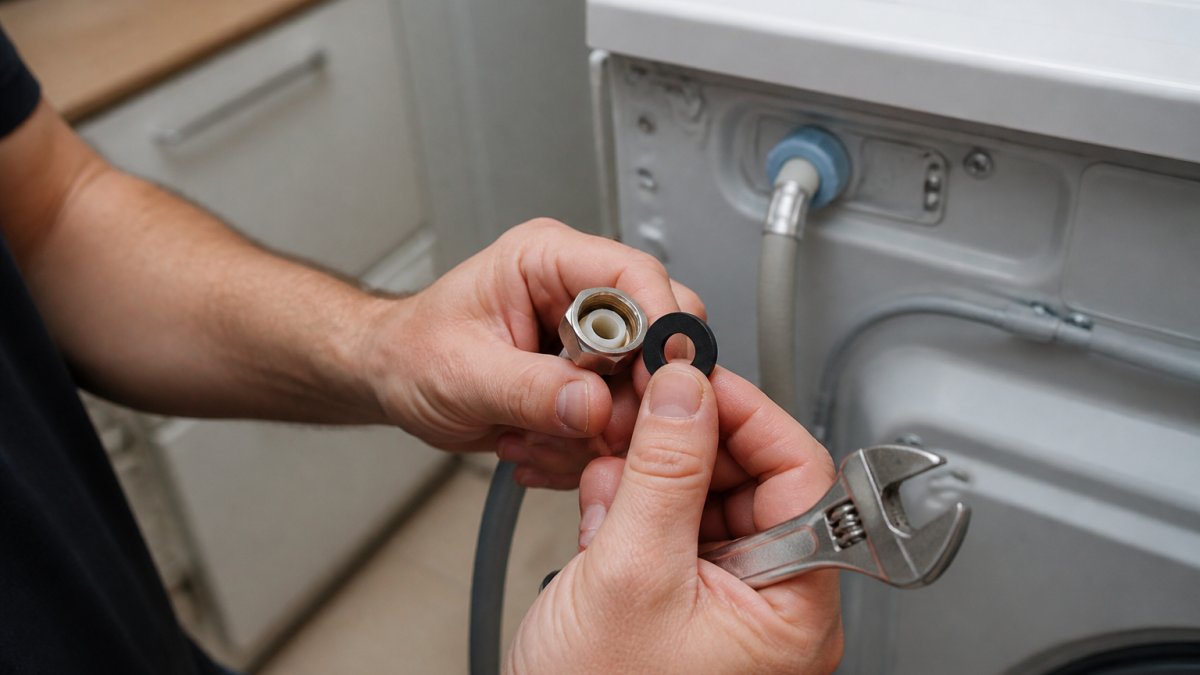
What you'll need:
- New washer or filter washer
- Adjustable spanner or multigrips
- Bucket and old towel
- Pliers for stubborn rings
Step 1: Isolate the water. Turn off both hot and cold taps at the wall.
Step 2: Disconnect the hose. Place the bucket under the nut, then unscrew it anticlockwise.
Universal Appliance 1/2" Water Inlet Hose per Mtr Cut to Length - Part # HC001A →
Step 5: Reconnect and tighten. Screw the nut on by hand, then snug it with the spanner.
Step 6: Test. Turn the taps on slowly and watch the joint for a full minute.
If it still drips: diagnose before you re-tighten
A drip after fitting a new washer is information, not a failure. Work through this sequence before reaching for the spanner again:
- Drip at the nut, washer new: the ring is misaligned, pinched or the wrong thickness. Undo it, reseat it flat, and check the OD against the nut recess.
- Drip at the nut, washer old: the rubber has hardened and is not compressing. Replace it.
- Drip along the hose body: the rubber has perished or split. No washer will fix this; replace the hose.
- Leak only when the machine fills: the fault is at the inlet valve or the connection behind it, not the hose washer.
- Leak at the tap end: the tap washer or thread tape is the likely culprit, not the hose washer.
When to replace the hose instead of the washer
Replacing a washer repeatedly is a sign the hose or fitting is the real problem. Replace the hose if you see bulging, cracking, stiffness, a persistent drip along its length, or if it is more than about five years old. Similar signs of wear often necessitate replacing a washer drain hose to prevent water damage behind your appliance.
When to call a technician
Stop and call a technician if water appears inside the machine cabinet, if the inlet valve continues to drip with the hose removed, if the tap itself will not shut off, or if the leak returns after a correctly fitted new washer and hose.
Secure the hose properly once fitted. A stainless steel inlet hose clamp, 14mm to 27mm, holds the hose firm, and a 19mm to 28mm clamp covers larger fittings.
Washing Machine Spare Parts Compatibility: Getting the Fit Right
Compatibility is where most DIY repairs go wrong. A washer that looks identical can differ by a millimetre, and that is enough to leak.
Some brands use proprietary fittings. Commercial machines from some brands often need specific hoses rather than universal ones. Check your model number before ordering anything.
A few compatibility rules we follow:
- Match the thread type: BSP is standard on most domestic machines
- Check hot versus cold: red-marked washers and hoses are for hot inlets
- Confirm hose diameter: 10mm pressure hose is common, but not universal
- Read the listing carefully: if it excludes your brand, believe it
Bring your model number to the counter or search it online and we can point you to the right part.
Diagnosing Leaks and Preventing Water Damage
Finding the source of a leak starts with drying everything and watching where water returns.
Run through this checklist:
- Drip at the nut: washer worn, misaligned or overtightened
- Drip along the hose: split or perished rubber, replace the hose
- Leak only when the machine fills: inlet valve or connection issue
- Leak at the tap end: tap washer or thread tape problem
Water damage is the real cost here. A slow leak under a laundry cabinet can rot flooring and swell particleboard before you notice.
Watch out: never ignore a drip "for now". A washer costs a few dollars. Replacing water-damaged flooring does not.
If the leak persists after a new washer, or water appears inside the machine, stop and call a technician.
Find the Right Washer and Hose at Allfix Electrical
Getting the right washer for washing machine hoses is simple once you know your sizes. The part is cheap, the job is quick, and a proper seal protects your laundry from water damage.
Allfix Electrical is a provider of appliance repair services and parts, with over 40 years of industry experience.
Search our range today to find the right part for your machine.
Frequently Asked Questions
What type of washer does a washing machine hose need?
Most inlet hoses use a flat rubber or silicone washer that sits inside the nut and seals against the tap or machine inlet. Many also include a stainless steel filter mesh to catch sediment. The washer for washing machine connections should match the thread size of your hose fitting, typically 3/4 inch BSP on standard domestic machines. Check whether your hose uses a plain washer or a combined filter washer before ordering.
How do I know what size washing machine hose washer to buy?
Measure the internal diameter of the nut on your inlet hose, or check the hose specification. Common domestic fittings are 3/4 inch BSP, with the actual thread diameter closer to 1 inch. Metric and imperial sizes are not always interchangeable, so match the fitting size stated on the hose or your machine's manual. If you are unsure, take the old washer or the hose to a parts supplier for a direct comparison.
Why is my washing machine inlet hose leaking?
A leak usually comes from a worn or hardened washer, a loose nut, or debris trapped in the seal. Inspect the washer for cracks or flattening, clean any sediment from the filter mesh, and reseat the washer before tightening the nut firmly by hand plus a quarter turn with a spanner. If the leak continues, the hose itself may be split or the tap connection damaged.
Can I reuse a washing machine hose washer?
Reusing a washer is possible only if it is still soft, uncracked and sits flat in the nut. Once rubber hardens or takes a permanent set, it will not seal reliably and may leak under pressure. Replacing a washer is inexpensive compared with water damage, so fit a new one whenever you disconnect a hose. Keep a spare washer on hand for future maintenance.
A leaking inlet connection is one of the easiest appliance faults to fix yourself, provided you have the correct part in hand. Allfix Electrical stocks filter washers, inlet hoses, nut and tail fittings and hose clamps, backed by over 40 years of parts experience and fast dispatch. Get started with Allfix Electrical and seal your washing machine connection properly the first time.

Share this post
- 0 comment
- Tags: washer for washing machine, washing machine filter washer, washing machine hose seal, washing machine inlet hose washer, washing machine spare parts compatibility
0 comment